How to Run a Golf League (Once You've Actually Got One)

Starting a league is the fun part. You pick a format, round up some buddies, and everybody shows up excited on opening night. Then week two happens. Somebody's out of town and needs a sub. Somebody texts you at 9 PM asking why their handicap didn't update. Somebody else swears they made par on 14 and the scorecard says otherwise.
Running a league, week after week, for an entire season, is a different job than starting one. It's less about golf and more about making 20 (or 60, or 120) people feel like the season is running smoothly, even on the weeks it isn't. This guide covers the actual weekly and seasonal rhythm of league admin: pre-round prep, scoring, standings, subs, communication, rainouts, keeping people engaged, and closing out the season. If you haven't launched your league yet, check out our guide to starting a golf league first, this one picks up right where that one leaves off.
Understand the weekly admin cycle
Before you get into the specifics, it helps to name what you're actually managing. Every league week breaks into four recurring jobs: pre-round prep (pairings, scorecards, reminders), during-round scoring (accuracy, disputes, keeping the leaderboard current), post-round admin (standings, handicaps, payouts), and communication that runs in the background the whole time. Miss one of these consistently and the league starts to feel disorganized even if the golf itself is fine.
Most of the stress in running a league comes from doing all four of these by hand, every single week, for 12-plus weeks straight. That's the stuff worth simplifying, however you end up doing it.
Handle pre-round prep
Every league night starts before anyone tees off. You need pairings that don't repeat the same matchups every week, scorecards that are actually correct for the format you're playing, subs confirmed, and a heads-up sent so nobody no-shows.
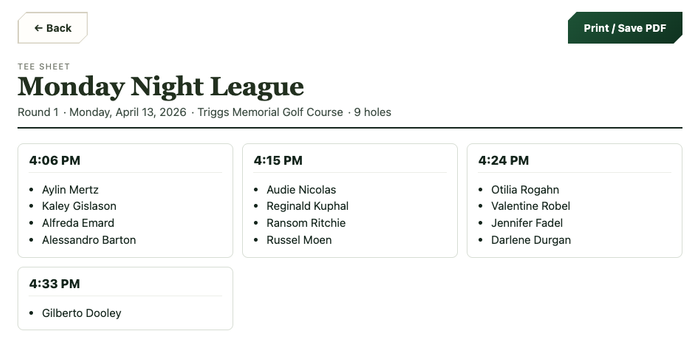
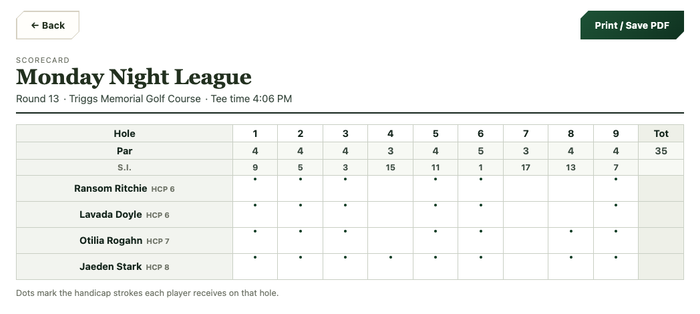
Pairings should rotate opponents automatically so you're not manually reshuffling a spreadsheet every week trying to remember who played whom last time. A printable or PDF tee sheet you can post at the course saves you retyping the same info into a group text, and scorecards with the handicap-stroke dots already marked ahead of time means nobody's hand-writing strokes onto 18 cards the night before. A reminder the morning of tee time is worth setting up too. "I forgot it was league night" stops being an excuse once people actually get a nudge.
Manage during-round scoring
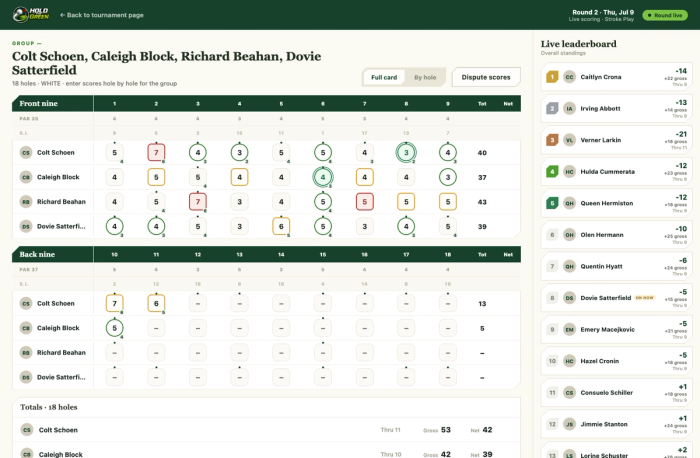
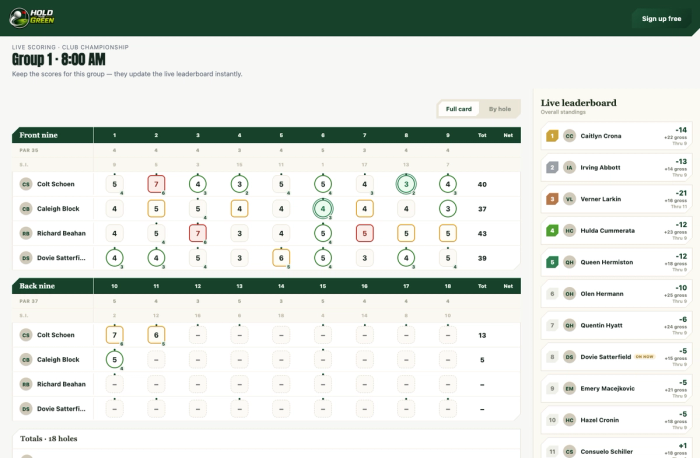
This is where accuracy actually gets decided, not in a spreadsheet later, but hole by hole while groups are still on the course. You want every group scoring correctly, a leaderboard other people can actually check, and a way to catch disputes before they turn into an argument in the parking lot.
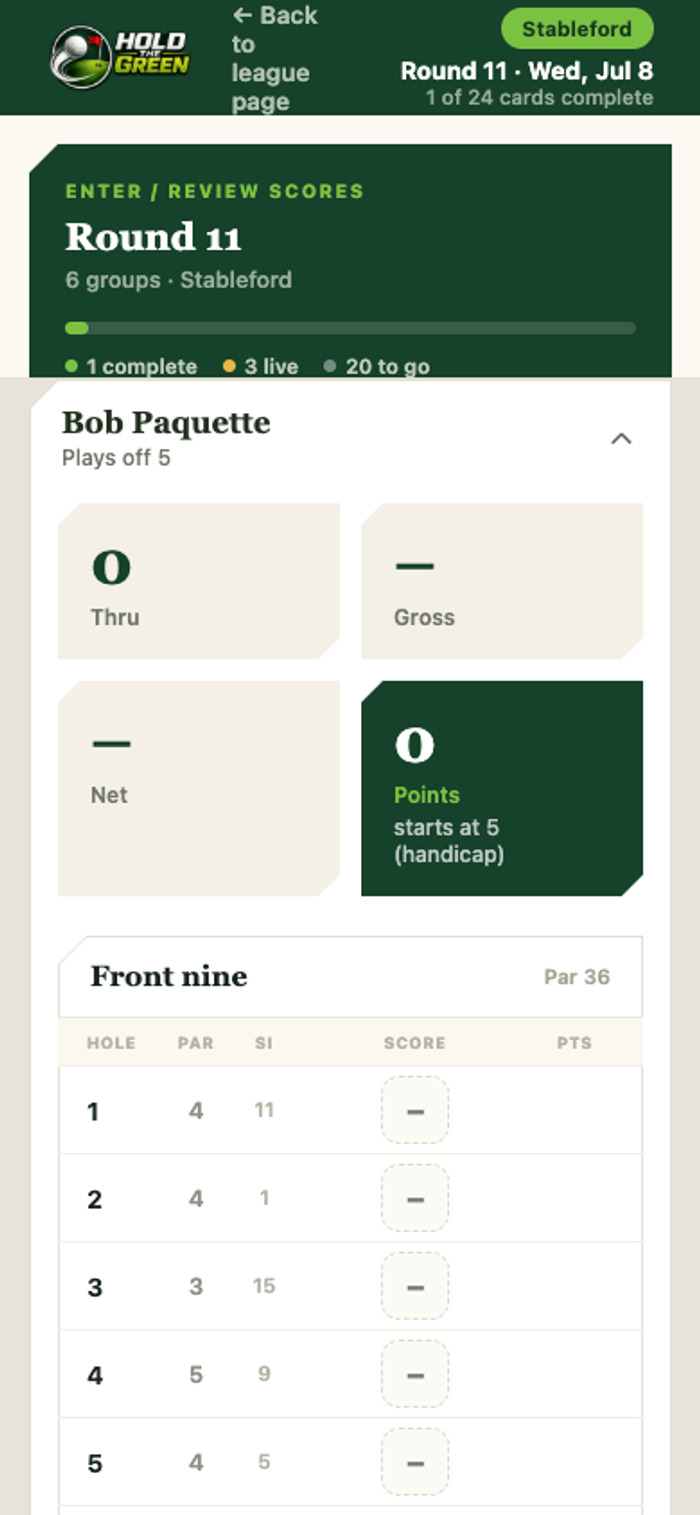
How you let people enter scores matters more than it sounds like it should. Some groups want a full scorecard typed in at once, others want it hole by hole as they play, and some just want to post a round total and move on, so whatever you use should bend to how your group actually plays instead of forcing one method on everyone. It also shouldn't depend on one person's phone. If a teammate is keeping score for the whole group, that's fine, but anyone should be able to check or enter their own score without waiting around. The leaderboard everyone's checking mid-round should update as scores come in and show whatever actually matters for your format, gross and net for stroke play, points for Stableford, match status for match play, skins for skins, not just a generic number nobody can make sense of. And if someone in the group doesn't have an account, there should be a no-signup way for them to keep score too, so a missing login never holds up an entire foursome.
Run post-round admin
Once the round wraps, the real admin work kicks in: standings need to update, handicaps need to stay current, and, if money's on the line, payouts need to be sorted out.
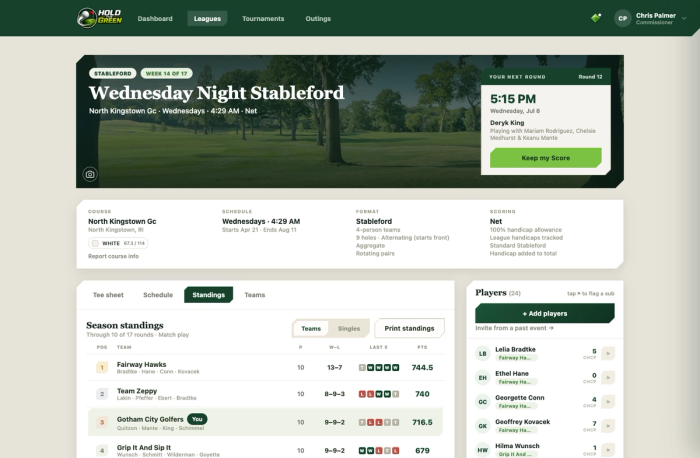
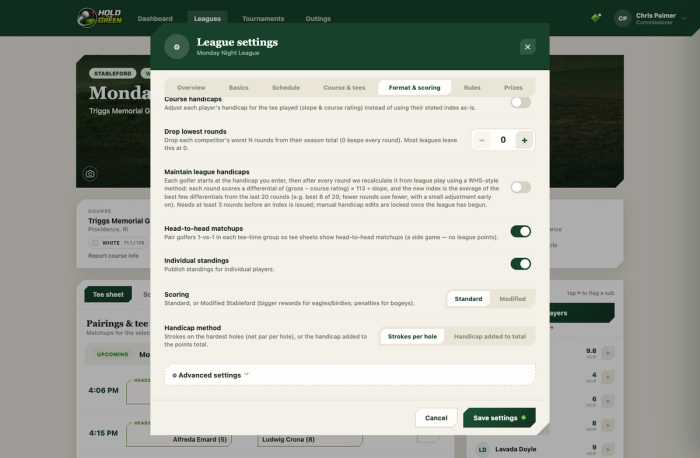
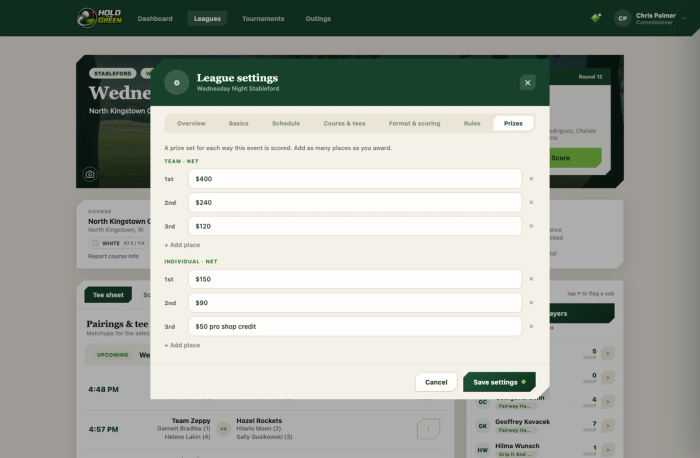
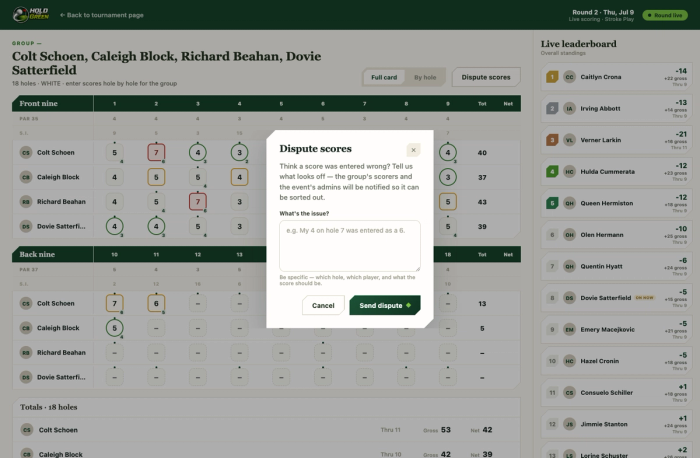
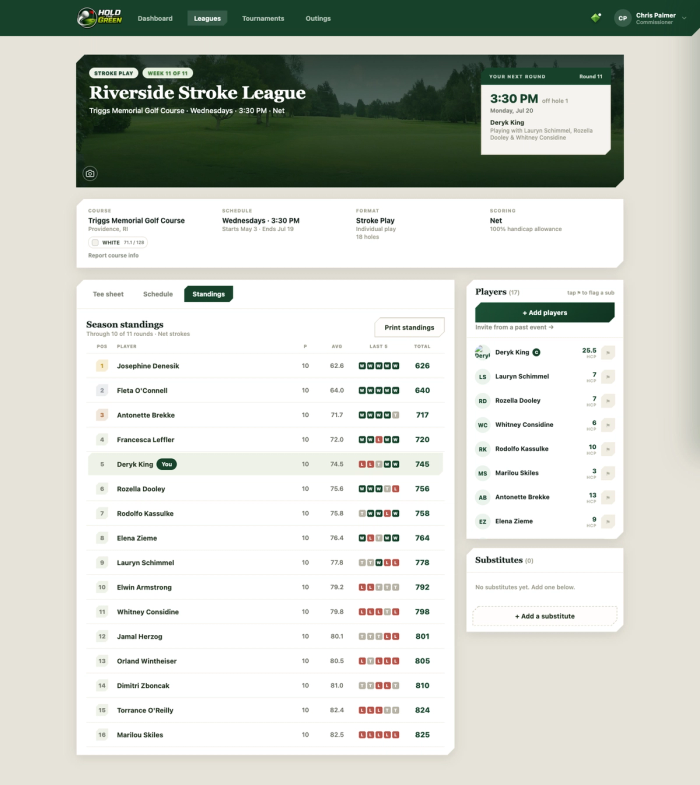
Standings should update the moment a round closes, not whenever you get around to updating a spreadsheet, and they should show whatever your league actually cares about, net and gross, team and individual, depending on how you're scoring. If you're tracking handicaps, they need to move on their own after every round using something like a WHS-style best-of calculation, so nobody's emailing around wondering whether a number is still accurate. That math gets more annoying, not less, once players are teeing off from different tees, so course handicaps need to adjust for the actual tee each player used that day rather than treating everyone's index the same. Payouts are worth setting up once, net and gross, team and individual, with however many places you actually pay out, instead of re-explaining who owes what in the group chat every single week. And when a score is genuinely wrong, you need a way to reopen a closed round to fix it, plus a way for players to flag something that looks off so it lands on your desk instead of festering for three weeks.
Handle substitutes without breaking the schedule
Somebody's always going to miss a week. The question is whether that breaks your pairings, your standings, or both.
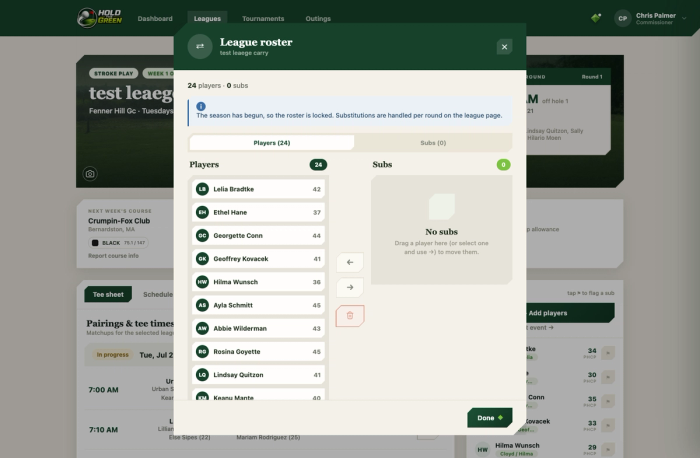
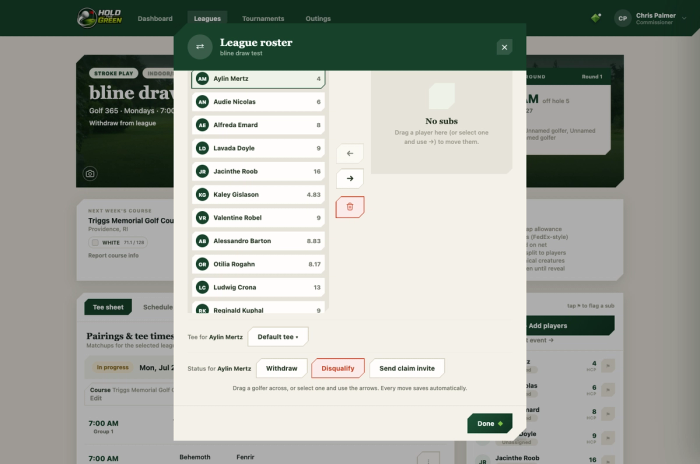
A sub should be able to fill a spot for one night without you rebuilding the whole group from scratch. And if someone's leaving the league entirely, there's a real difference between a no-show and a genuine withdrawal or disqualification, so pulling them out of standings and leaderboards should be clean, not a zeroed-out row sitting in your spreadsheet for the rest of the season. Rosters change more than people expect over a season too, so adding, removing, or moving a player around shouldn't be a bigger job than it needs to be.
Keep communication tight
Half of running a league well is just making sure people know what's happening, tee times, format reminders, results, roster changes, without you personally texting 20 people every week.
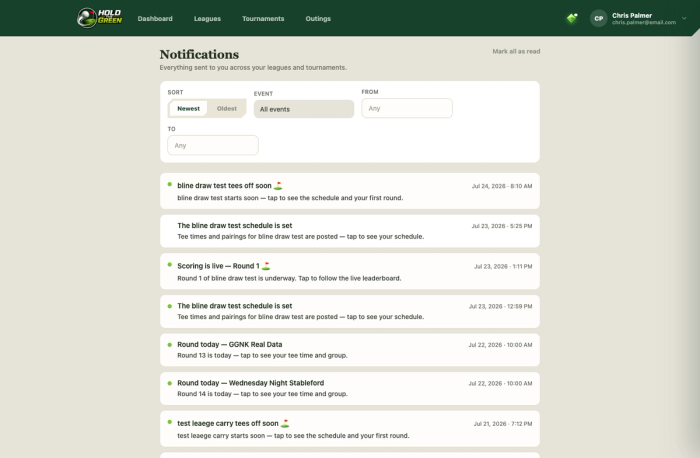
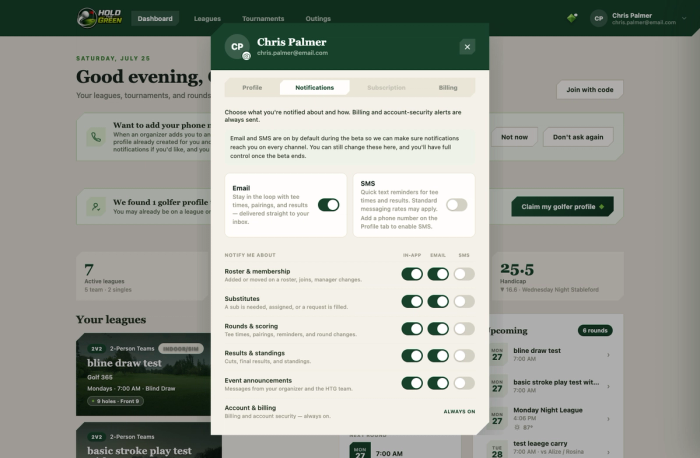
People need one place they can go back and check, not just a firehose of texts they scrolled past three weeks ago. Keeping a real history of alerts, tee times, pairings, results, roster changes, filterable by date or event, means someone can actually go find that one message instead of asking you to resend it. And different people pay attention to different channels, so the same alert going out by whatever mix of in-app, push, email, and text each person actually wants beats picking one channel and hoping the whole league checks it.
Handle rainouts and schedule changes
Weather, course closures, and life happen. A league that can't flex around a rained-out week starts to feel fragile fast.
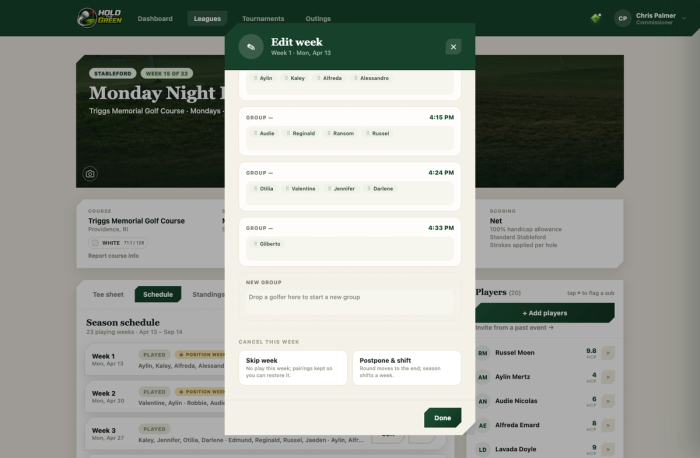
You need real options here, not just "cancel the week." Skipping a rained-out week, or postponing and sliding the whole schedule back, keeps the season length honest. A position week, re-pairing groups by current standings instead of the regular rotation, is a good way to make a makeup week feel like it still matters. A round shouldn't just sit open forever if someone forgets to close it out, either, so some kind of auto-close after a reasonable window saves you from chasing down a card from three weeks ago. Nine-hole leagues have their own wrinkle: a skipped week can throw off the front/back rotation if nothing's tracking it, so that's worth double-checking whenever a week gets skipped or overridden. And it genuinely helps to know the forecast for an upcoming round ahead of time, temperature, wind, conditions, for the specific course you're playing, rather than finding out once everyone's already standing on the first tee.
Keep players engaged through the back half
The middle of a season is where interest quietly drains out. People stop checking standings once they're out of contention, and a league that feels like a formality by week eight is a league that's smaller next year.
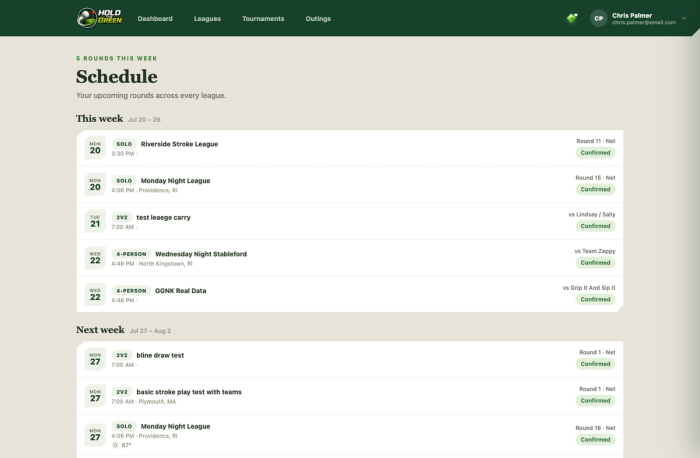
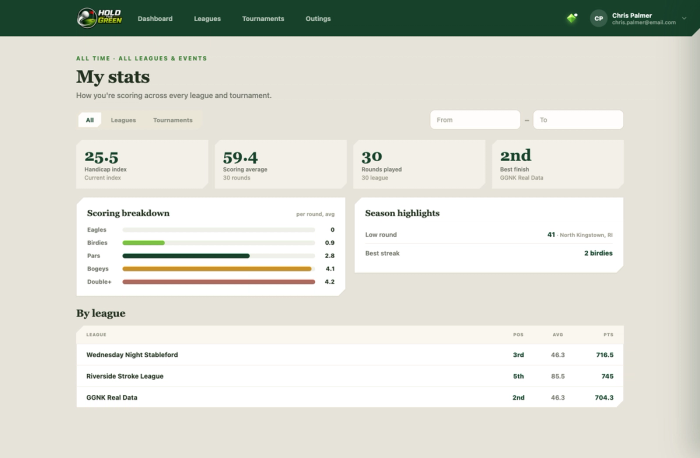
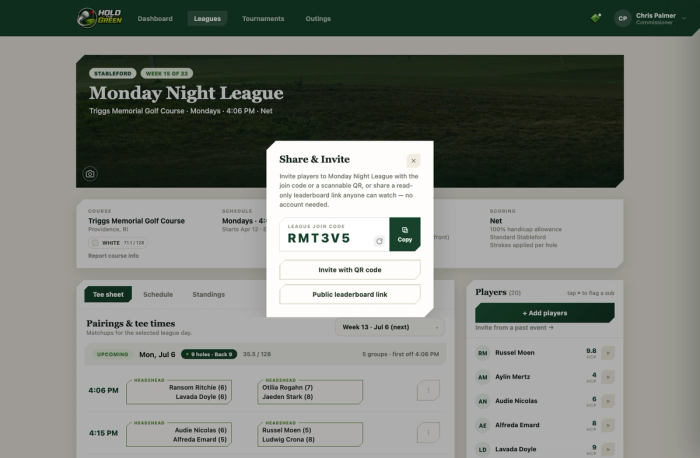
Give people a reason to keep checking in even after a rough stretch. A personal stats page, handicap, scoring average, a breakdown from eagles to double bogeys, season highlights, is the kind of thing people actually open on their own, not because you asked them to. A shareable public leaderboard that family or spectators can follow live with no account needed turns your season into something people outside the league can pay attention to too, which is a nice bit of energy for what's otherwise just 20 people and a spreadsheet. And letting standings drop each player's worst round or two keeps one bad night from quietly ending somebody's season in week four.
Close out the season and set up year two
Run an end-of-season position round or playoff in the final week or two, seeded by the season standings, ideally in a different format than your regular season so it actually feels like an event. Resolve final standings, hand out payouts, collect feedback from your players while it's fresh, and announce next year before that final-night energy fades.
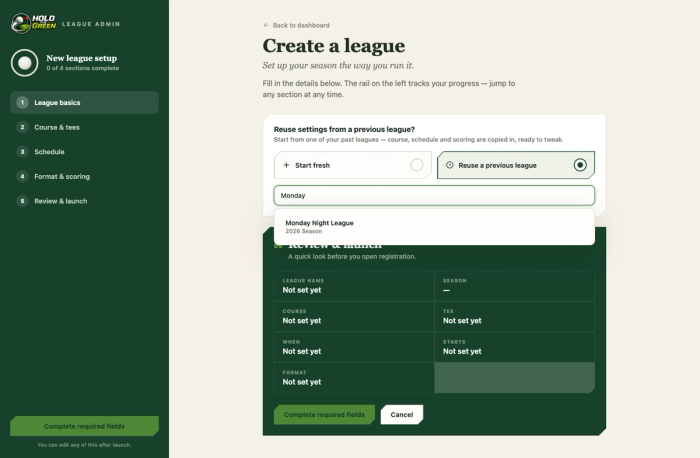
Setting up year two is the part that usually gets put off until March, out of dread at rebuilding every setting from scratch. It doesn't have to be. Whatever you used to build the league the first time, look for a way to start from last year's setup, same format, same course and tees, same schedule shape, and just adjust what's actually different instead of filling out a blank form again.
Before vs. after
- Pairings & tee sheets: manually rebuilt each week vs. auto-generated, rotating opponents.
- Scoring: written on cards, re-entered later vs. entered live, hole-by-hole or by total.
- Standings: calculated by hand after each round vs. update live as rounds close.
- Handicaps: tracked in a side spreadsheet vs. auto-maintained after every round.
- Subs: ad hoc texts, hope for the best vs. built-in substitution handling.
- Rainouts: manual reschedule, confused players vs. position weeks, auto-slide schedule.
- Communication: group text, easy to miss vs. in-app + push + email/SMS, one inbox.
- Next season: rebuilt from scratch vs. reused from last season's setup.
FAQ
How much time does it actually take to run a golf league each week?
It depends heavily on how much of the admin is manual. A league running on spreadsheets and group texts can easily eat an hour or more per week between pairings, score entry, and standings. Automating pairings, scoring, and standings collapses most of that into a few minutes of review.
What's the best way to handle a player who needs a substitute?
Confirm the sub as early in the week as possible, and use a system that lets a fill-in slot into an existing group without you rebuilding the pairings from scratch.
How do I keep handicaps accurate through the season without doing it manually?
Use a tool that recalculates each player's handicap automatically after every round based on their actual scores in your league, rather than a static number nobody updates.
What should I do when weather cancels league night?
Don't just cancel the week outright if you can avoid it, sliding the schedule or running a position week keeps the season's rhythm intact instead of leaving a permanent gap in your standings.
How do I keep players engaged in the second half of the season?
Give people a reason to keep checking in even if they're out of contention, a stats page, a shareable public leaderboard, or a "drop your worst round" rule that keeps one bad night from ending anyone's season early.
Just the logistics
Running a league well, week after week, is mostly a logistics problem wearing a golf outfit. Whatever you use to do it, the goal is the same: less time squinting at a spreadsheet in the parking lot, more time actually playing. That's exactly what we built Hold the Green to handle, the pairings, scoring, standings, and communication, automatically, so the job left for you is just showing up and enjoying the season you built.